
ia as an inventor
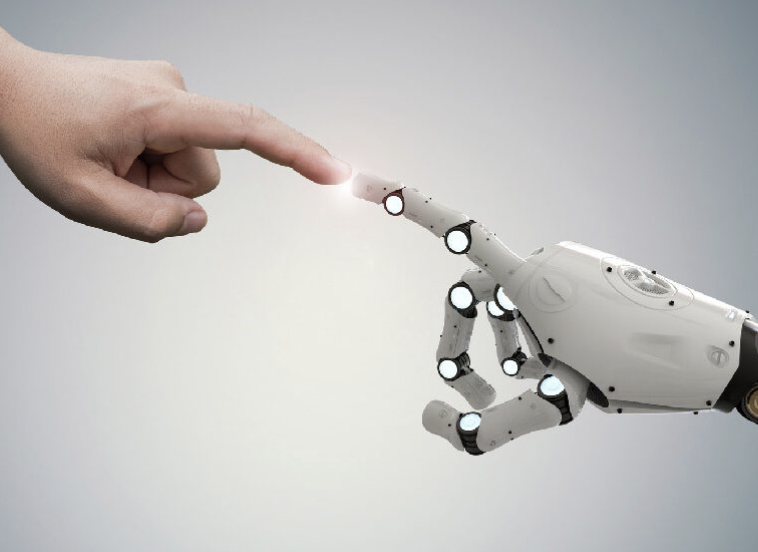
« Nature likes to hide »
Heraclitus[1]
Two recent judgments in South Africa and Australia have accepted the fanciful argument that an Artificial Intelligence («AI») could be a inventor. I have no intention of commenting on these decisions here, I simply want to try and understand how such a far-fetched (and useless) idea could have gained so much traction in such a short time.
Let's be clear from the outset: although this theory has always struck me as fanciful, to the point of making me smile, I thought it was perhaps worth asking (more) why it might seem seductive, rather than criticising it without having considered it for a moment. To try and listen to it, not just hear it, in order to understand it, and therefore to understand its success (even though it is entirely media-driven, above all).
This «meditation» will have led to two avenues of thought.
Man is «enveloped» by technology
First and foremost, man, in his relationship with technology, will often fail to understand the entirety of the technical phenomenon. In other words, our world is enveloped by technology, to the extent that we can precisely understand how each device functions, and thus we lose our direct relationship with the world.[2]. Thus, to write this article, my spoken word no longer passes through the hand to the written word (manuscript), but passes through a sophisticated machine which will have implemented numerous algorithms to do so.
It seems to me that the same applies to an inventor, on a larger or smaller scale. Just by using a computer, we don't precisely know what's happening inside the «black box,» does that mean that all inventions which use computers are not the work of inventor persons? No. Should different positions be adopted depending on the sophistication of the computer? It doesn't seem so to me either. We would be told that AIs are much more powerful. Certainly, but do they have the capacity to decide beyond the instructions they initially received? No. Furthermore, the question of the material used by the inventor and the room left for them to be inventive has already been addressed by case law. In any event, this reflection on AI taken to its extreme tends to question the very existence of our inventor. Do DIY geniuses still exist?
The Epinal image of Professor E. Gadget endures
Paradoxically, it is undoubtedly the image of a "finder of places", of this genius inventor, that is likely at the origin of the success of the DABUS affair. Why might this idea, as comical as it may seem, have gained so many followers in such a short time? Probably because it creates shortcuts that all lead back to the mythology of the law of patent law. Since ancient Greece, the craftsman and his technè (arthave always had the greatest difficulty finding their place alongside the poet and their creation (the poet was seen as the sole creator before the development of monotheistic religions)[3]. Yet, it wasn't until the twilight of the 18th centurye century, at the dawn of our modern patent law, that the inventor was glorified as the emblematic figure of Genius[4]. A historian has demonstrated that this was the result of a desire for recognition from a new social group rejected by the traditional 'Academy», meaning by scientists[5]. It seems to us that the emergence of this figure can be linked to the advent of mechanisation that followed the Revolutions, or even to the source that constitutes the beginning of Modern Times (in the 15th century with Gutenberg and the printing press, Copernicus, etc.).
In any case, from Article 1, Section 8, Clause 8 of the US Constitution, the Founding Fathers of the United States of America were already stating « The Congress shall have the power […]. to promote the progress of useful arts and sciences, by securing for limited times to authors and inventors the exclusive right to their respective writings and discoveries. »And the patent system across the Atlantic remained until recently attached to this emphasis on the inventor, to the detriment of the applicant. Thus, from the end of the 18the at the start of the 20the century, the figure of the inventor as we know it was born: a lone individual, gifted with extraordinary intelligence, who, alone in their cellar, advances humanity through their mind. Bergson thus saw in the’invention, the characteristic of human intelligence, its most elusive quality, making its progenitor a genius[6].
Cette figure de l’inventeur continue aujourd’hui encore le sens commun du terme « inventeur », et peut, parfois, continuer d’animer le sens juridique de ce terme, tel qu’il est compris par le droit des brevets[7]. That said, mythology, which the Greeks themselves did not believe in[8], continues to captivate the uninitiated: the inventor, this extraordinary figure, would be fundamental to the patent system and should necessarily be the owner of their invention. Hence two (erroneous) ideas put forward to justify the recognition of AI as an inventor: recognising an inventor other than the AI (whereas it could allegedly invent on its own) would amount to not recognising the «correct» owner, it would diminish the moral right of the inventor (which is in reality only a right of paternity intended to follow the chain of rights) and, above all, it would prevent the patentability of inventions to which the AI had contributed.
Or, any patent law practitioner knows the reality: the applicant is the owner of the property right, while the inventor is, from the beginning, excluding, presuming that his right was assigned to the applicant from the outset[9]. This is the well-known distinction between the first-to-invent and first-to-file systems. In such a system, adopted by all countries worldwide, the inventor only has two (marginal) rights: the right to claim ownership of the invention if they prove it was stolen from them, and the right to be named as the inventor. Consequently, in the end, the arguments of the «defenders» of AI as inventor do not hold water, if we remember that: an AI never invents alone and that the applicant (its owner) will necessarily be the owner of the invention to which their AI contributed. In other words, recognising an AI as an inventor requires twisting the legal system (particularly on the issue of legal personality), creating unnecessary confusion and insecurity, for no gain, since the AI will be protected anyway.[10].
To conclude, this story of AI as inventor reminds us of the power of Myths, and, at the time of the bicentenary of Napoleon's death, that « Imagination directs the world » (for better or worse, one might add, as the Emperor himself demonstrated).
[1] V. Heraclitus, Fragments, by M. Conche, PUF, p. 253.
[2] V. M. Heidegger, Parménide, Gallimard Publishing, specifically pp. 140 and 141.
[3] Plato, The Symposium, Les Belles Lettres, Universities of France, 1992, no 205 b), pages 58 and 59.
[4] Even though Bacon had already outlined this glorification of the inventor in the mid-17th century.
- Bacon, Novum Organum Scientiarum, At Adrianus Wijngaerde and Franciscus Moiardus, 1645 (1620), no XXXVI, p.40.
[5] L. Hilaire-Pérez, Technical invention in the Age of Enlightenment, Albin Michel, 2000, pp. 147 ff.
[6] H. Bergson, L'évolution créatrice, PUF, 1957, p. 165.
[7] The legal «charge» of a term often leads to different meanings between common language and legal language; an example is «treasure,» which in the sense of Article 716 of the Civil Code is «a hidden or buried thing the ownership of which cannot be justified by anyone, and which is discovered by the mere effect of chance.» See P. Amselek, "Philosophy of Law and Speech Act Theory,", In Speech Act Theory, Ethics and Law, sous. dir. P. Amselek, PUF, 1986, p. 109. Not to mention the excess of the signifier (sign) and what it designates (the signified). The signifier of ’invention« actually covering a large number of very different realities. See G. Deleuze, Logic of Sense, Les Éditions de Minuit, Critiques, 1969, p. 63.
[8] V. M. Heidegger & E. Fink, Heraclitus. Winter Semester Seminar (1966-1967), Gallimard, 2017, in which Heidegger recalls that the Greeks themselves did not believe in their myths.
[9] We will (re)read Mousseron's foundational thesis here: Le droit du breveté d’invention. Contribution à une analyse objective, LGDJ, Bibliothèque de droit privé, vol. 23, 1961.
[10] V. M. Dhenne, Artificial Intelligence and Patent Law, Intellectual Property, no. 78, p. 23