
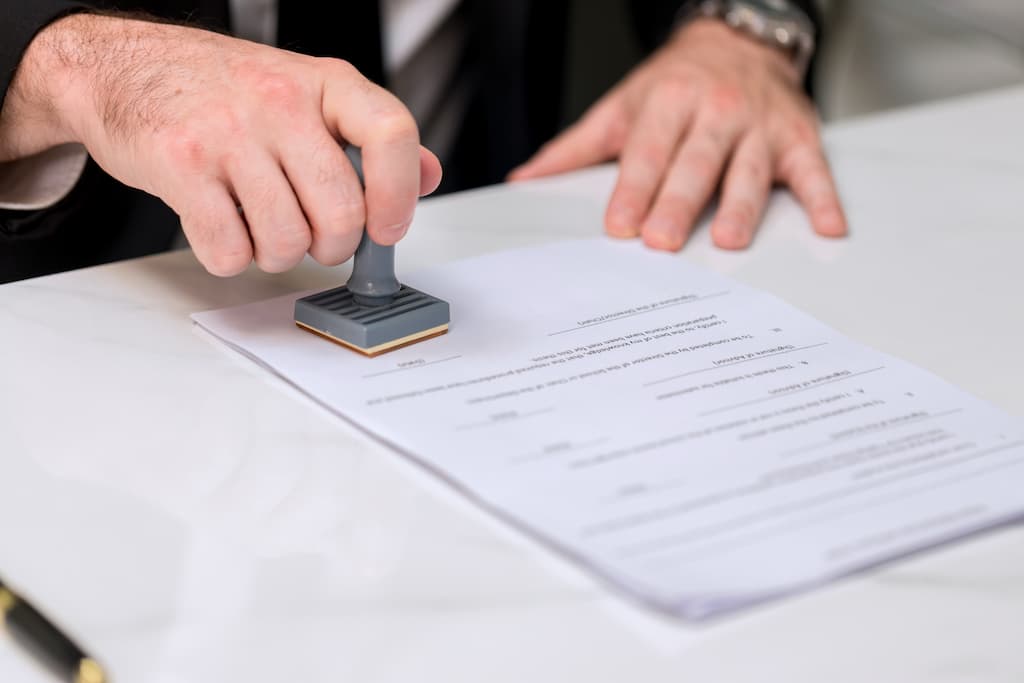
A patent is a title protecting a technical invention, meaning a product or process that provides a technical solution to a given technical problem. Filing a patent grants its holder an exclusive exploitation right over it. In other words, it allows the inventor or their assignee to prohibit any third party from exploiting the invention without their authorization, for the duration of the patent. patent life which is 20 years. Consequently, a patent is an essential tool for both economic and strategic value creation. But what are the key conditions and steps for filing a patent?
The patentability conditions of the invention
Avant toute chose, il faut s’assurer que l’invention soit brevetable. L’article L611-10 du Code de la intellectual property liste les conditions de brevetabilité de l’invention et dispose : « Inventions which are new, involve an inventive step and are capable of industrial application shall be patentable, in all fields of technology. »But what does that mean in practice?
A new invention
Article L611-11 of the Intellectual Property Code states: « An invention shall be considered new if it is not comprised in the state of the art. »
This means that the invention must not relate to an innovation that has already been made accessible to the public, regardless of its author, date, place, means, or form of presentation to the public. It is therefore crucial to maintain the confidentiality of the invention until filing.
Checking the novelty of an invention before filing it is not a legal requirement. However, failing to do so can lead to significant risks, both strategically and financially. Fortunately, there are suitable research tools and methods, which should be chosen according to the technical field, the level of urgency, or the competitive context. By carrying out this check, you also ensure that you are not infringing on an existing patent, thereby avoiding any risk of counterfeiting.
An invention involving an inventive step
Article L611-14 of the Intellectual Property Code states: « An invention shall be considered as involving an inventive step if, in respect of the state of the art, it is not obvious to a person skilled in the art. ».
Theinventive step, c’est l’idée selon laquelle une invention ne doit pas être une solution trop évidente, logique, ou facile à un problème déjà connu. C’est un critère essentiel, car la plupart des brevets sont annulés pour manque d’activité inventive, bien plus que pour le défaut de nouveauté ou d’application industrielle.
Mais qui juge si l’invention est évidente ou non ? C’est un personnage fictif qu’on appelle « l’person skilled in the art« . Ce n’est pas une vraie personne, mais un professionnel ordinaire et compétent dans le domaine technique concerné. On regarde alors si la solution apportée par l’invention était évidente ou non pour l’homme du métier, c’est-à-dire se demander s’il aurait pu le faire aisément. Plusieurs indices peuvent alors être utilisés pour considérer que votre invention n’est pas évidente : apporte un progrès technique réel, surmonte des difficultés importantes, répond à un besoin connu depuis longtemps…
This criterion is subjective, but the offices and courts try to be as methodical as possible.
An invention capable of industrial application
Article L611-15 of the Intellectual Property Code states: « An invention shall be considered capable of Industrial Application if it can be made or used in any kind of industry, including agriculture. ».
For an invention to be patentable, it must have a concrete and practical character. If it is too abstract or purely theoretical, it cannot be used in industry (in the broad sense of the term), and therefore cannot be patented. In summary, your invention must be capable of being manufactured or used in an industrial field.
Inventions excluded from patentability
Some creations are excluded from patentability because they are too abstract ideas or concepts. This is the case for discoveries, scientific theories, mathematical methods, computer programs as such, or therapeutic or surgical methods.
Also excluded are inventions contrary to public order or ethics, the human body as such, and plant and animal varieties obtained by natural means.
These exclusions are exhaustively listed in Articles L611-16 to L611-19 of the Intellectual Property Code.
The deposit steps
Once patentability conditions have been verified, you can then begin the filing procedure.
Preparing the file in advance
Before filing a patent application, the file must be thoroughly prepared. This step is crucial because insufficient or poorly worded drafting can weaken the protection of your patent. Therefore, it is recommended to seek assistance from a patent attorney or attorney.
- Write a complete description of the invention She must clearly explain what the invention does, how it works, and what it is used for.
- Formulate precise claims : ce sont les phrases qui définissent ce qui est protégé. Elles doivent être claires, concises, et fondées sur la description. Mieux vaut en faire trop que pas assez, car on peut réduire le champ des claims, mais pas l’élargir après dépôt.
- Add drawings if necessary they allow for a better understanding of the invention, but never replace the written description.
- Thinking about the protection strategy Target countries, priority, types of titles (patent, utility certificate, etc.).
Deposit with the competent authority
Once the file is finalised, you must submit it to the relevant office:
- In France, it concerns the’INPI (National Institute of Industrial Property) via an online procedure.
- In Europe, it is the’EPO (European Patent Office) which offers a Europe-wide filing. It is also possible to target multiple countries thanks to the PCT international procedure.
The filing provides an official date, which marks the beginning of protection (and counts for priority). It is also possible to file a provisional application (a faster and cheaper procedure, but which must be completed later).
Review and publication
After filing, there is initially a formal examination, focusing on document verification, followed by a substantive examination.
This exam covers the previously described patentability conditions : nouveauté, activité inventive et application industrielle. Les offices établissent par la suite un rapport de recherche qui indique si des documents antérieurs pourraient affecter la brevetabilité (état de la technique).
It is important to note that the examination is cooperative. Indeed, throughout the procedure, you will engage with the examiner to adapt, restrict or defend your claims.
The application is published 18 months after filing, allowing the public to become aware of the invention. After grant, there can be an opposition within a certain timeframe (9 months at the INPI, as at the EPO) by third parties who challenge the patent.
Further reading